 Question Constellation Sign up for free
 AQA · GCSE · Combined Science · Higher
Density of the object calculation
A student wanted to determine the density of the irregular shaped object shown in Figure 3.
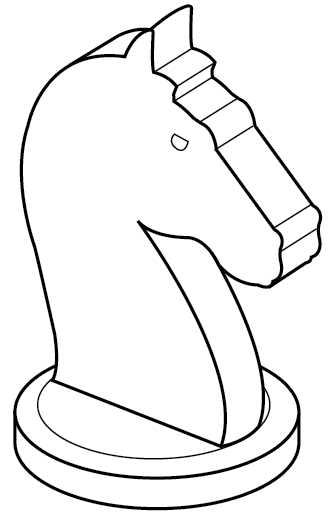
Plan an experiment that would allow the student to determine the density of the object.
Write your answer first. You can study the marking guidance whenever you need it.
Study the marking See what earns credit and compare it with a full-mark answer.
Marking points
- 1 Measure the mass of the object using a balance or scales.
- 2 Measure the volume of the irregular object by water displacement, using either a measuring cylinder or a displacement/eureka can.
- 3 For a measuring cylinder method, record the initial water volume, submerge the object, record the final water volume, and calculate final minus initial volume.
- 4 For a displacement can method, fill the can to the spout, submerge the object, collect the displaced water, and measure the collected water volume.
- 5 Use to calculate the density.
- 6 Present the steps in a logical order so the method would give a valid density.
Full-mark answer
Measure the mass of the object using a balance. Part-fill a measuring cylinder with water and record the initial volume. Carefully place the object fully under the water and record the final volume. The volume of the object is final volume minus initial volume. Calculate the density using .
Why this answer loses marks
Put the object in water and see if it floats.
Floating does not determine the object's density quantitatively.