 Question Constellation Sign up for free
 AQA · GCSE · Combined Science · Higher
Comparing currents in parallel branches
Figure 10 shows the circuit with two identical filament lamps.
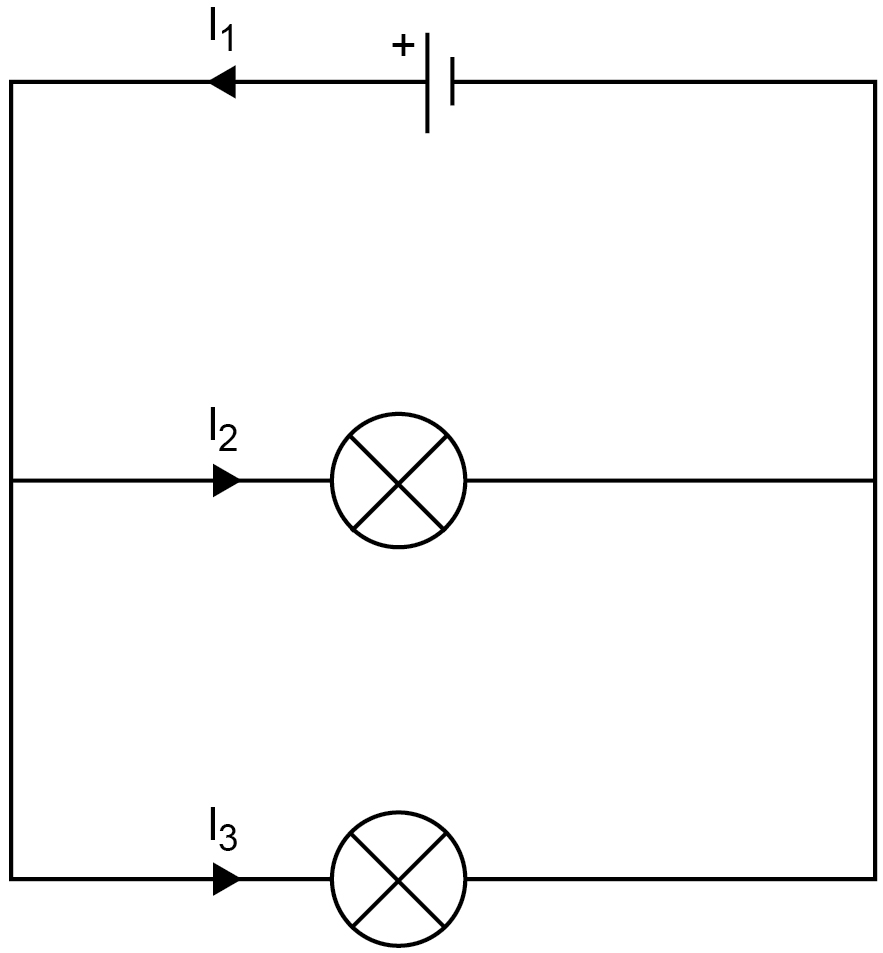
Compare the currents I, I and I
Write your answer first. You can study the marking guidance whenever you need it.
Study the marking See what earns credit and compare it with a full-mark answer.
Marking points
- 1 State that the current in the main branch equals the sum of the currents in the two parallel branches: .
- 2 State that the two branch currents are equal because the lamps are identical: .
- 3 State an equivalent comparison such as or .
Full-mark answer
The identical parallel branches carry equal currents, so . The main current is the sum of the branch currents, so .
Why this answer loses marks
The branch currents are equal to each other, but the main current is their sum, so it is larger.