 Question Constellation Sign up for free
 AQA · GCSE · Combined Science · Higher
Electrical heating in a kettle element
A student investigated how the mass of water in an electric kettle affected the time taken for the water to reach boiling point. The kettle switched off when the water reached boiling point. Figure 4 shows the kettle.
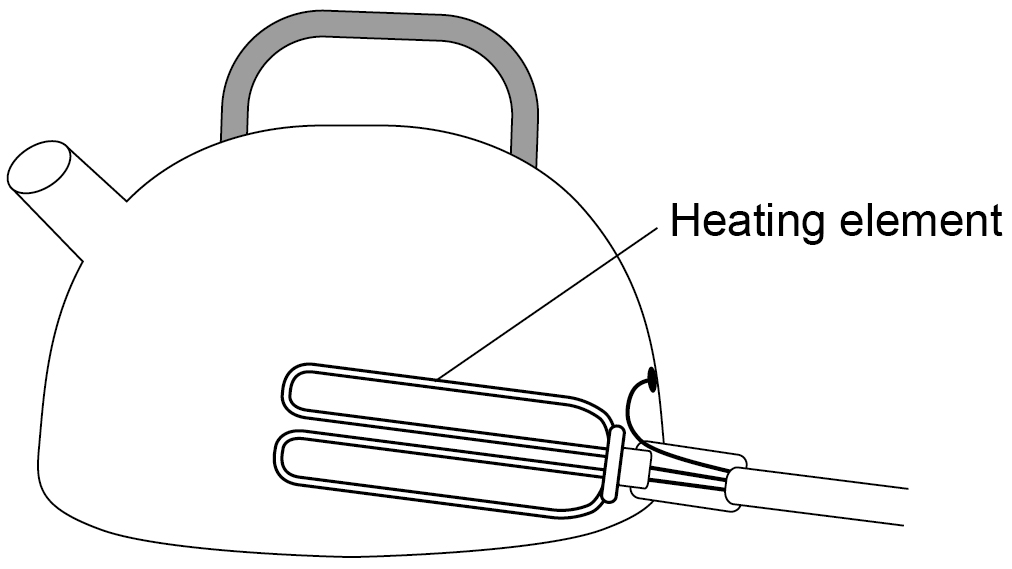
The heating element of the kettle was connected to the mains supply.
Explain why the temperature of the heating element increased.
Write your answer first. You can study the marking guidance whenever you need it.
Study the marking See what earns credit and compare it with a full-mark answer.
Marking points
- 1 Say that electrons collide with particles in the heating element, or that a current flows in the element.
- 2 Say that these collisions increase the kinetic energy of the particles, increase the internal energy store, or make the particles vibrate more rapidly.
Full-mark answer
When a current flows in the heating element, electrons collide with particles in the element. These collisions increase the kinetic energy of the particles, so they vibrate more rapidly and the temperature increases.
Why this answer loses marks
The mains supply is hot so it heats the element.
The mark scheme credits current/electron collisions transferring energy to the particles in the heating element, not heat coming from the mains.