 Question Constellation Sign up for free
 AQA · GCSE · Physics · Higher
Irradiation, Contamination and Drinking-Water Hazard
Some people used to think that radioactive substances had health benefits. In the 1920s, a water container called a revigator was sold. The walls of a revigator contain radioactive isotopes. Figure 6 shows a revigator.
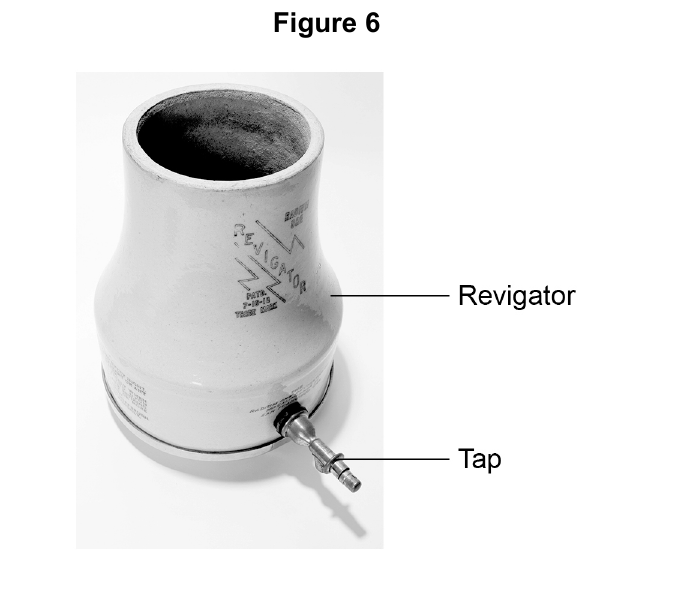
The revigator was filled with water and left overnight. People then drank the water from the revigator.
Explain how irradiating and contaminating the water affected the hazard caused by drinking the water.
Write your answer first. You can study the marking guidance whenever you need it.
Study the marking See what earns credit and compare it with a full-mark answer.
Marking points
- 1 Explains irradiation using an accepted route: radiation enters without making the water radioactive, or radiation kills pathogens.
- 2 States the matching irradiation effect on hazard: unchanged for the first route or decreased for the pathogen route.
- 3 Explains that contamination puts radioactive isotopes into the water or body.
- 4 States that contamination increases the hazard.
Full-mark answer
Irradiating: radiation entered the water, but irradiation does not make the water radioactive, so irradiation itself did not increase the hazard. Contaminating: radioactive isotopes entered the water and could enter the body when the water was drunk, so contamination increased the hazard.
Why this answer loses marks
Both irradiation and contamination make the water radioactive.
Irradiation exposes the water without transferring radioactive material; contamination means radioactive isotopes are present and can enter the body.