 Question Constellation Sign up for free
 AQA · GCSE · Combined Science · Higher
Coolant temperature and internal energy
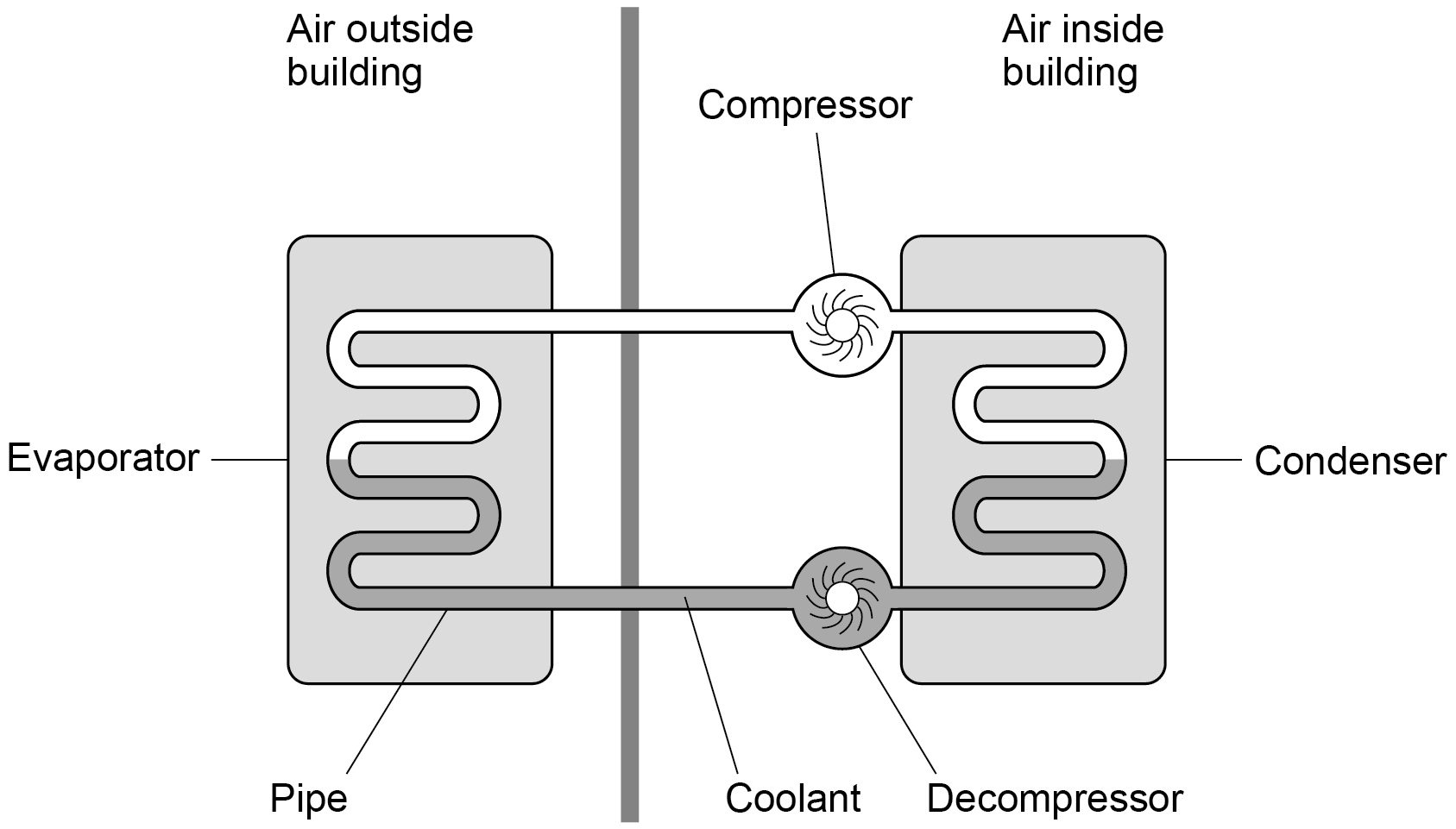
An air source heat pump transfers energy from the air outside a building to increase the temperature of the air inside the building. Figure 13 shows an air source heat pump. The compressor is connected to the mains electricity supply. The pipe in the heat pump contains a substance called coolant. In the evaporator, energy is transferred from the air outside the building to the liquid coolant. The temperature of the coolant increases and it evaporates.
Explain what happens to the internal energy of the coolant as its temperature increases.
Write your answer first. You can study the marking guidance whenever you need it.
Study the marking See what earns credit and compare it with a full-mark answer.
Marking points
- 1 Say that the particles gain kinetic energy, or that the particles move faster.
- 2 Say that the particles gain potential energy as the coolant evaporates.
- 3 Conclude that the internal energy increases, because internal energy is the total kinetic and potential energy of the particles.
Full-mark answer
As the temperature increases, the particles of the coolant gain kinetic energy and potential energy. The internal energy increases because it is the sum of the kinetic and potential energy of the particles.
Why this answer loses marks
The internal energy stays the same because the coolant changes state.
Energy is transferred to the coolant, increasing the kinetic and potential energy of its particles, so internal energy increases.