 Question Constellation Sign up for free
 AQA · GCSE · Combined Science · Higher
Dice type and simulated half-life
The number of times the dice have to be rolled to halve the original number of dice in the tray represents the half-life. Figure 7 shows an eight-sided dice and a six-sided dice. The student now used eight-sided dice to model radioactive decay. Dice that landed on the number six were again removed from the tray.
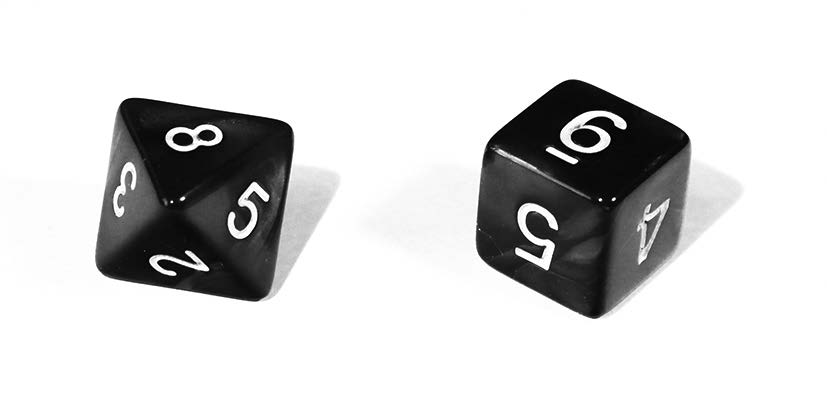
The half-life represented by rolling eight-sided dice is likely to be different from the half-life represented by rolling six-sided dice. Explain how.
Write your answer first. You can study the marking guidance whenever you need it.
Study the marking See what earns credit and compare it with a full-mark answer.
Marking points
- 1 Explain that an eight-sided dice has a lower chance of landing on 6 in one roll than a six-sided dice.
- 2 Conclude that the eight-sided dice model has a greater half-life.
Full-mark answer
An eight-sided dice has only a chance of landing on 6 in one roll, whereas a six-sided dice has a chance. Fewer dice are removed each roll with eight-sided dice, so it takes more rolls for the number of dice to halve. The eight-sided dice therefore represents a greater half-life.
Why this answer loses marks
The half-life is smaller because the dice has more sides.
More sides means the chance of rolling a 6 is smaller, so fewer dice decay each roll and the half-life is greater, not smaller.