 Question Constellation Sign up for free
 AQA · GCSE · Combined Science · Higher
Kangaroo speed and jump height
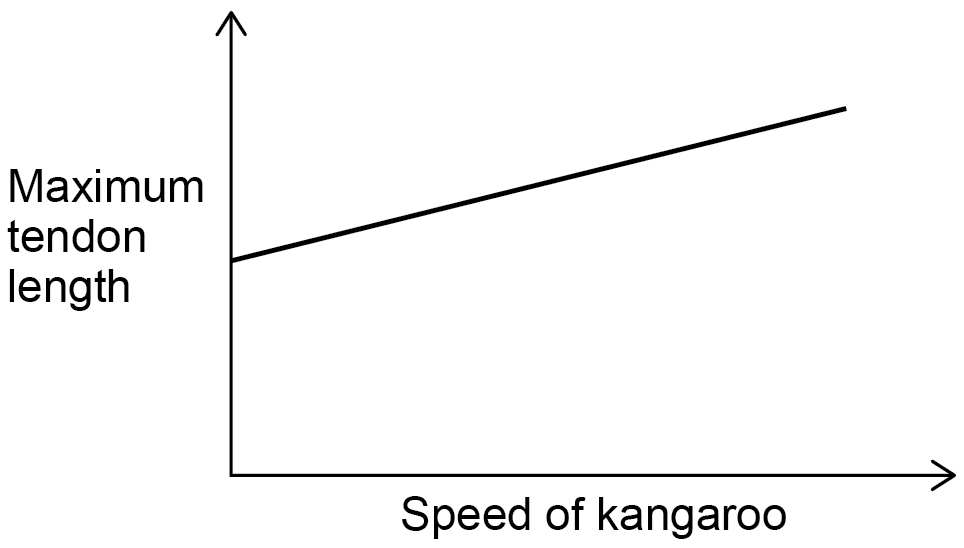
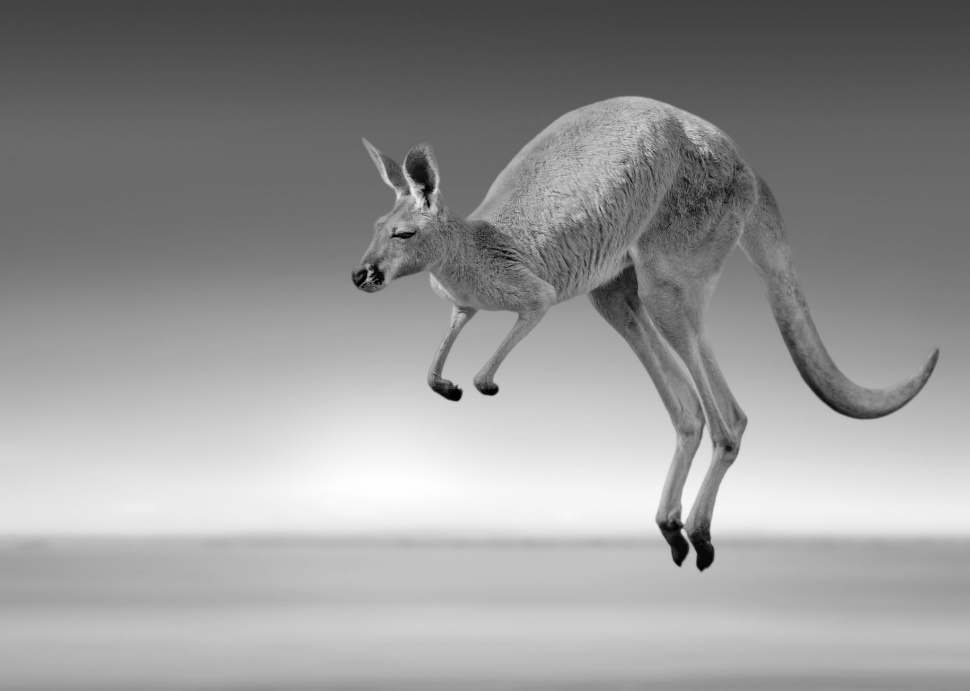
Kangaroos are large animals that travel by jumping. Figure 8 shows a kangaroo. Each leg of a kangaroo has a tendon connected to a muscle. Each tendon can be modelled as a spring. When a jumping kangaroo lands on the ground, the tendons stretch. Figure 9 shows a sketch graph of how the maximum tendon length during a jump changes with the speed of the kangaroo.
Explain why a kangaroo can jump higher as its speed increases.
Write your answer first. You can study the marking guidance whenever you need it.
Study the marking See what earns credit and compare it with a full-mark answer.
Marking points
- 1 Use the graph to state that the tendon extension or stretch increases as speed increases.
- 2 Explain that a larger extension means more elastic potential energy is stored in the tendon.
- 3 Explain that this elastic potential energy is transferred to gravitational potential energy, allowing the kangaroo to jump higher.
Full-mark answer
As the kangaroo’s speed increases, the maximum tendon extension increases. A greater extension means more elastic potential energy is stored in the tendons. This energy is then transferred to gravitational potential energy, so the kangaroo can jump higher.
Why this answer loses marks
The tendon gets longer so it jumps higher.
This uses the graph but does not explain the energy storage and transfer.