 Question Constellation Sign up for free
 AQA · GCSE · Geography · Higher
Coastal landscape processes
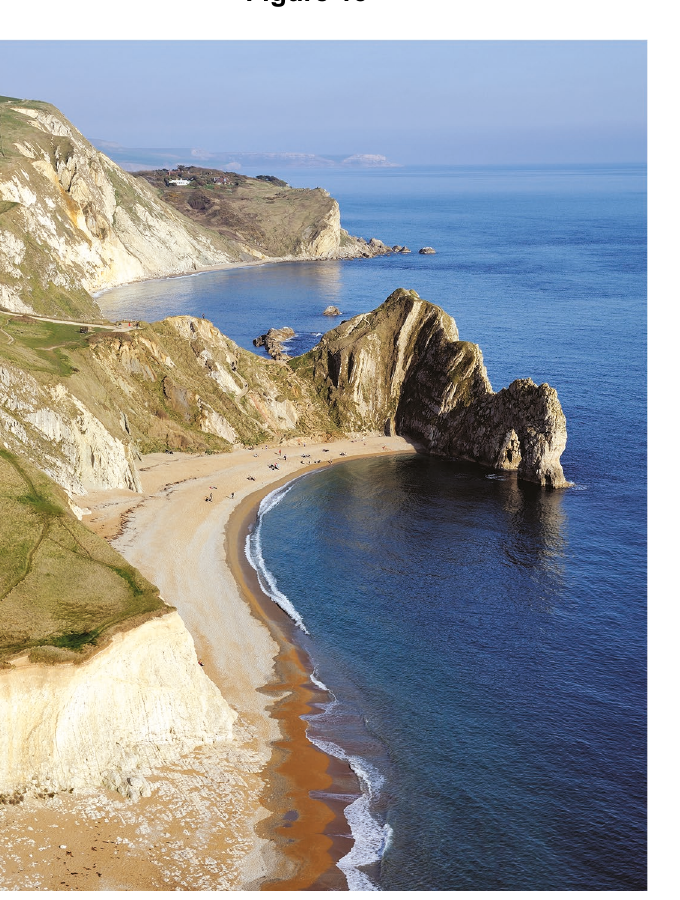
Explain how coastal landscapes are formed by different processes. Use Figure 15 and your own understanding.
Write your answer first. You can study the marking guidance whenever you need it.
Study the marking See what earns credit and compare it with a full-mark answer.
Marking points
- 1 Explains named coastal processes.
- 2 Explains formation/development of at least two landforms for high-level credit.
- 3 Applies Figure 15 evidence such as arch, stacks/stumps, cliffs, headlands, bays or beach.
Full-mark answer
Waves exploit cracks in a headland by hydraulic action and abrasion. Small cracks widen into caves and, if erosion cuts through the headland, an arch forms like the one in Figure 15. Weathering and wave attack then weaken the arch roof until it collapses, leaving a stack and later a stump. Softer rocks can also erode faster than harder rocks, producing bays while more resistant rocks remain as headlands. Deposition in sheltered water can build beaches in the bays.
Why this answer loses marks
Waves erode the coast and make landforms.
It names a process but lacks sequence and source-linked development showing how landforms form.