 Question Constellation Sign up for free
 AQA · GCSE · History · Higher
Comparing interpretations of Homesteading on the Great Plains
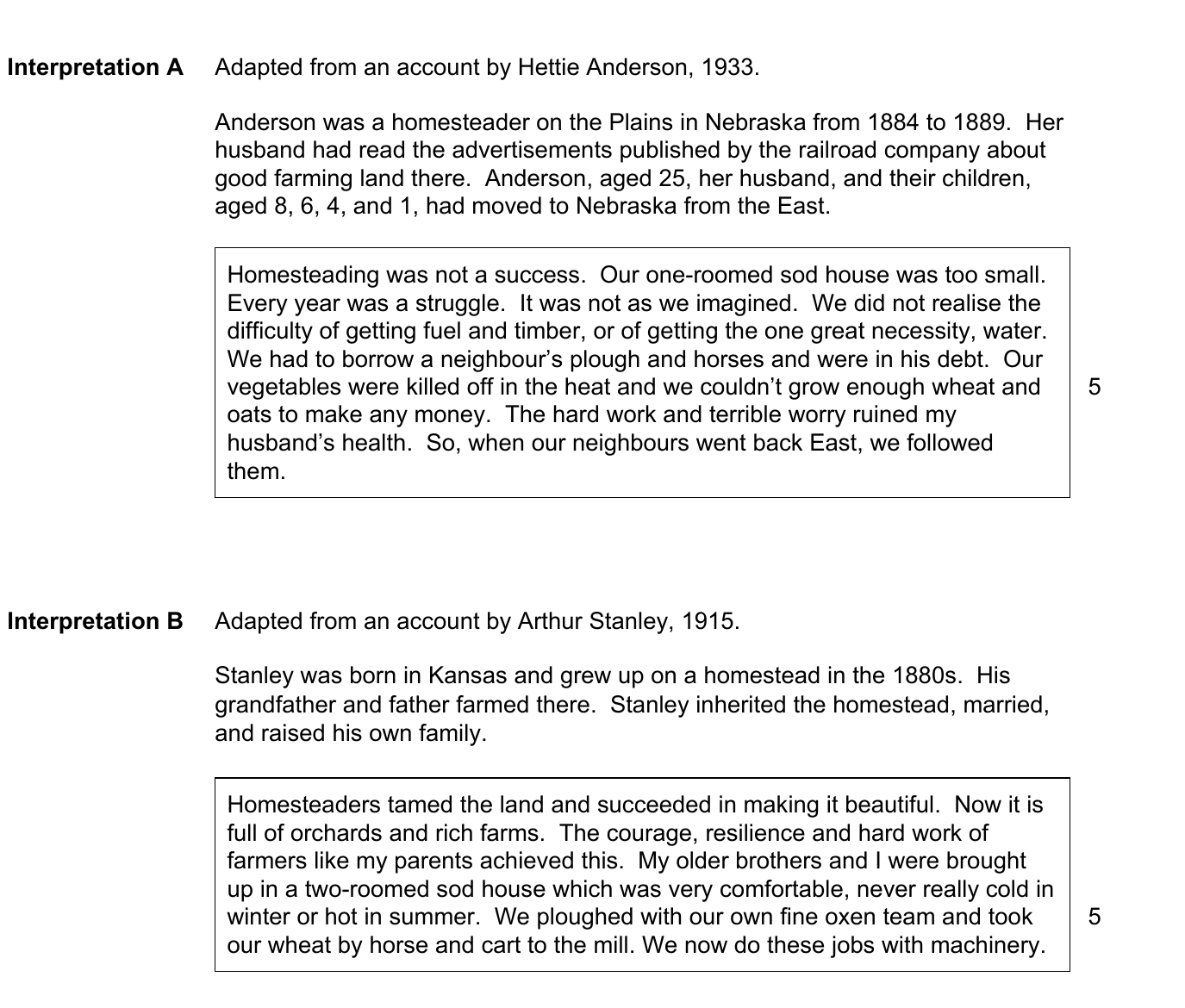
How does Interpretation B differ from Interpretation A about Homesteading on the Great Plains? Explain your answer based on what it says in Interpretations A and B.
Write your answer first. You can study the marking guidance whenever you need it.
Study the marking See what earns credit and compare it with a full-mark answer.
Marking points
- 1 Uses both Interpretation A and Interpretation B.
- 2 Explains at least one clear difference between the interpretations' content.
- 3 Supports the difference with accurate evidence from the interpretations.
- 4 Develops the comparison rather than only listing separate details.
Full-mark answer
Interpretation B differs from Interpretation A because it presents homesteading as successful and rewarding, whereas Interpretation A presents it as a struggle that failed. Anderson says the sod house was too small, that water, fuel and timber were difficult to get, and that they could not grow enough wheat and oats to make money. By contrast, Stanley says homesteaders tamed the land, made it beautiful, and created orchards and rich farms. Interpretation B is also more positive about daily life, describing a comfortable two-roomed sod house and successful work with animals and machinery, while Interpretation A emphasises debt, hard work and ruined health.
Why this answer loses marks
Copies long quotations from both interpretations without explaining a difference.
The examiner report notes that over-used quotation often hindered answers; a credited answer needs a clear comparison of what the interpretations suggest.