 Question Constellation Sign up for free
 OCR · GCSE · English Literature · Higher
Comparing Self-Love in Two Poems
Read the two poems below.
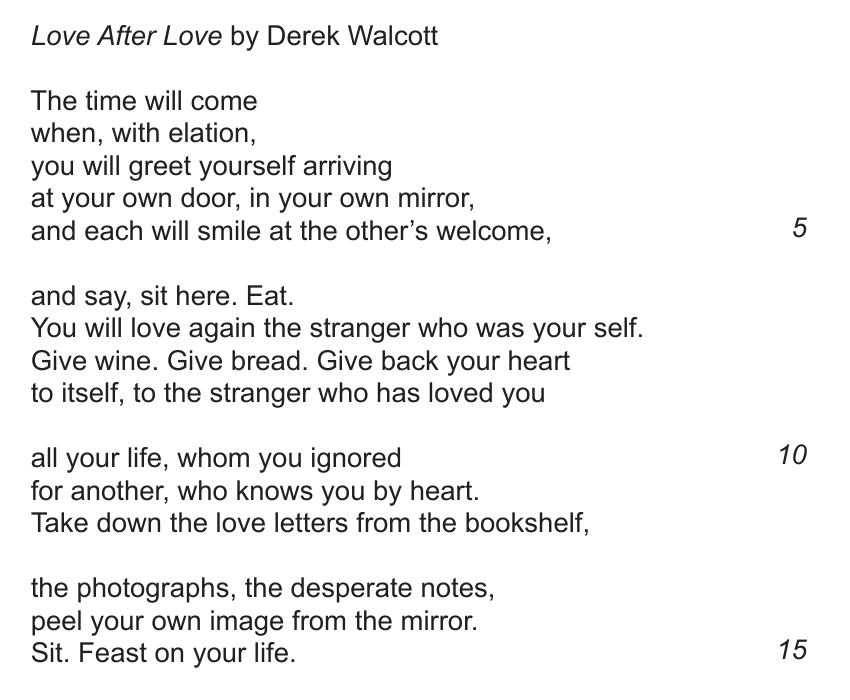
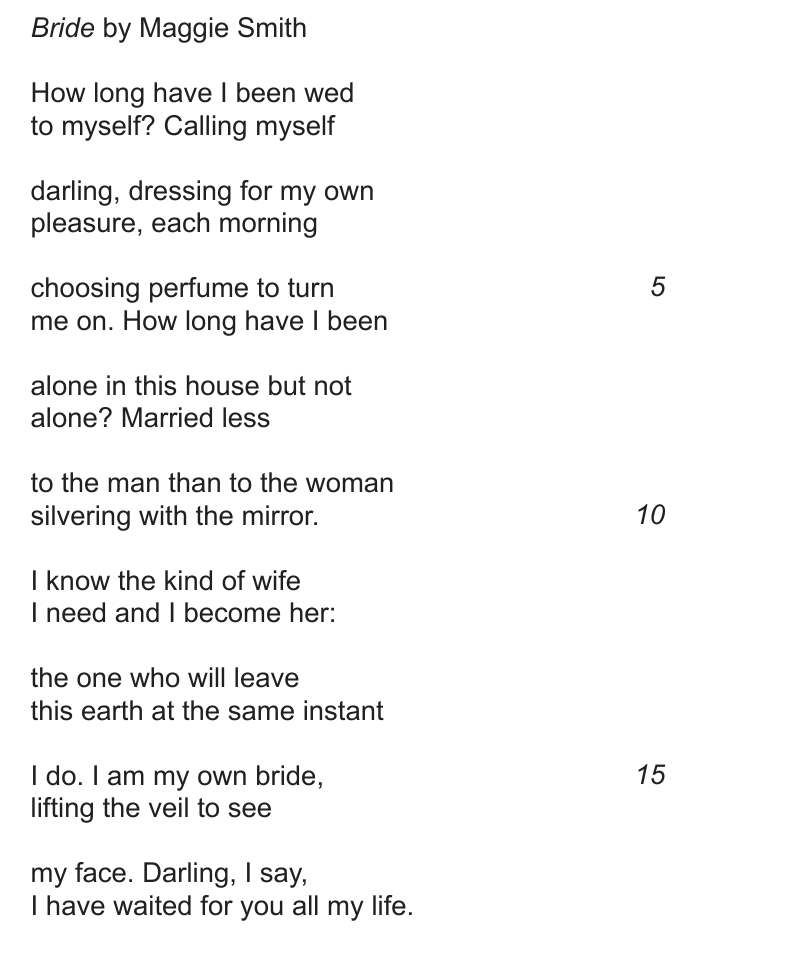
Compare the ways in which these poems present how a person feels about themselves.
You should consider:
- ideas and attitudes in each poem
- tone and atmosphere in each poem
- the effects of the language and structure used.
Write your answer first. You can study the marking guidance whenever you need it.
Study the marking See what earns credit and compare it with a full-mark answer.
Marking points
- 1 Respond critically to both poems and support the argument with well-selected textual references.
- 2 Analyse language, form and structure for meanings and effects rather than only identifying techniques.
- 3 Sustain explicit comparison across the response, including similarities and differences in viewpoint and method.
- 4 A strong answer may compare future anticipation with reflective self-questioning, the feast and bride metaphors, and each poem’s movement towards self-recognition.
Full-mark answer
Both poems present self-acceptance as a joyful discovery, but they place that discovery at different points in time. In ‘Love After Love’, the repeated future tense in ‘The time will come’ promises that the addressee will recover a self once treated as a ‘stranger’. The imperatives ‘Give wine. Give bread’ and ‘Sit. Feast’ turn self-love into an extended feast metaphor, suggesting nourishment, generosity and renewed enjoyment of life. In ‘Bride’, the speaker looks back through the repeated question ‘How long have I been’, then answers it by declaring ‘I am my own bride’. This extended marriage metaphor makes self-knowledge seem committed and lasting. Both poems use mirrors and enjambment to capture revelation, yet Walcott urges a future reconciliation with an ignored self, while Smith recognises that her satisfying relationship with herself has already existed alongside, and more securely than, her relationship with ‘the man’. Together, the poems suggest that fulfilment comes when a person stops seeking all value outside themselves.
Why this answer loses marks
The ‘stranger’ is simply another person whom the speaker meets.
Read the image in the poem’s pattern of self-rediscovery: the stranger is the neglected or hidden self. Support the interpretation with ‘your self’, the mirror and the instruction to give the heart back ‘to itself’.