 Question Constellation Sign up for free
 OCR · GCSE · English Literature · Higher
Comparing Demands to End Conflict
Read the two poems below.
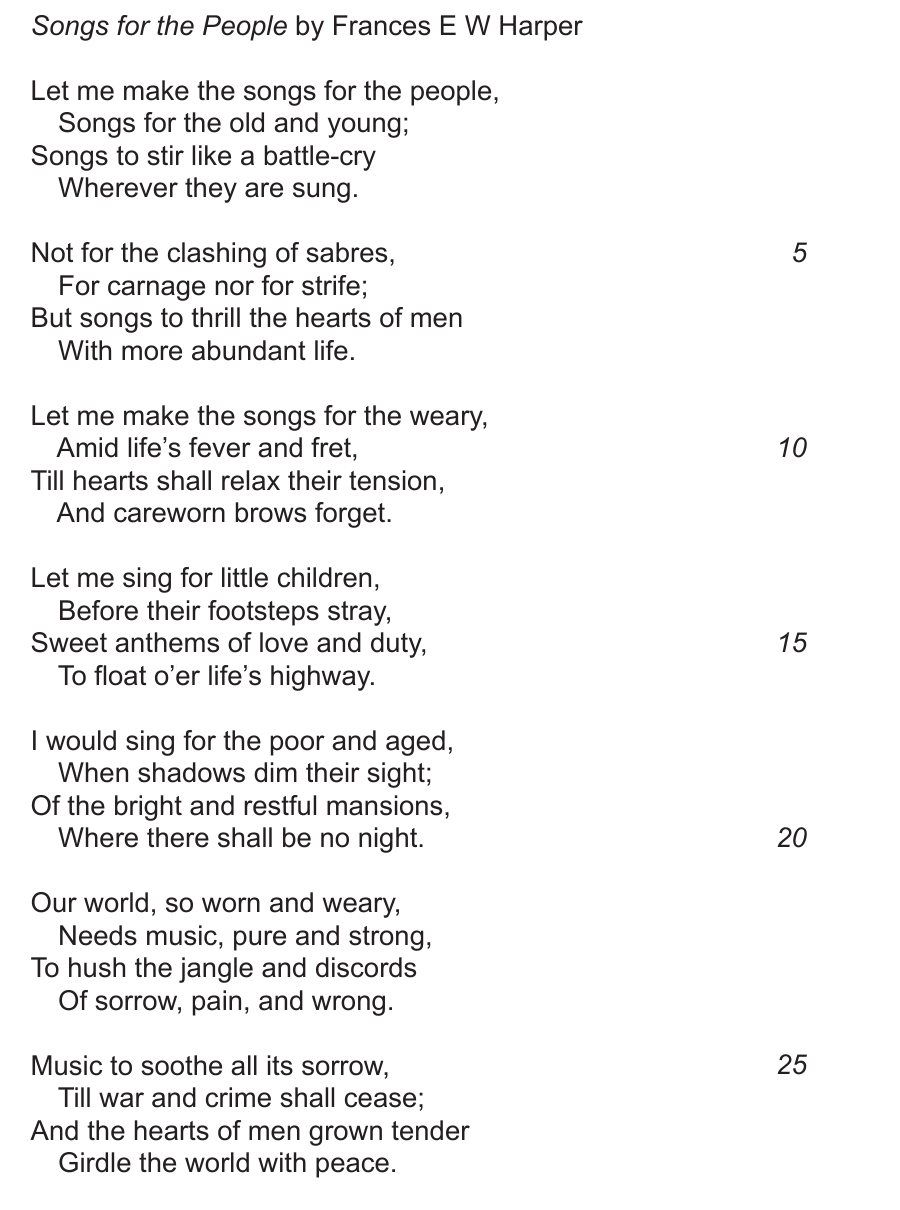
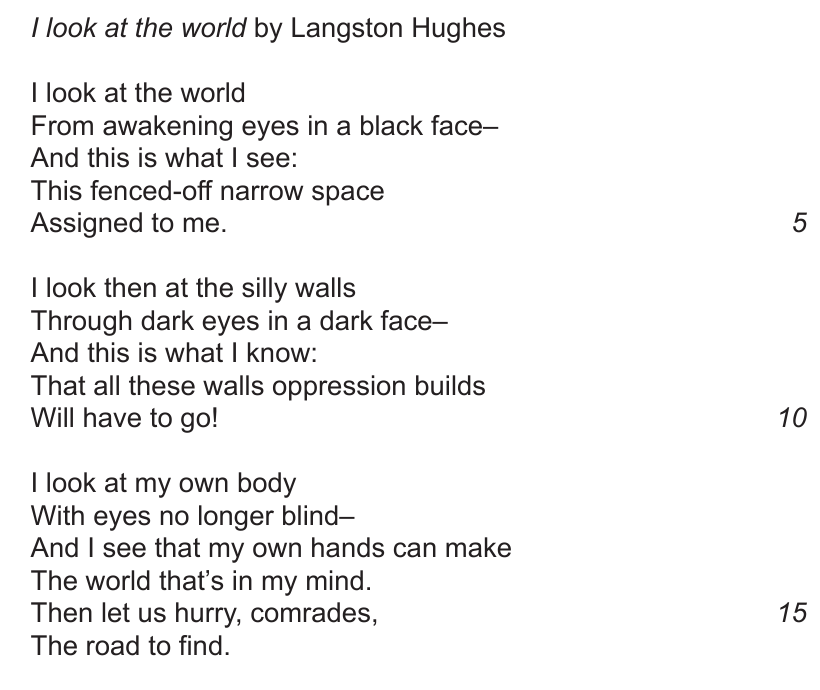
Compare how these poems present a demand for a conflict to end.
You should consider:
- ideas and attitudes in each poem
- tone and atmosphere in each poem
- the effects of the language and structure used.
Write your answer first. You can study the marking guidance whenever you need it.
Study the marking See what earns credit and compare it with a full-mark answer.
Marking points
- 1 Develop an informed response to both poems with precise supporting references.
- 2 Analyse how specific language, form and structural choices shape each demand for change.
- 3 Sustain comparison, including the universal scope of Harper’s appeal and Hughes’s direct experience of racial oppression.
- 4 A strong response may compare Harper’s musical regularity with Hughes’s urgent enjambment and his shift from ‘I’ to ‘us’.
Full-mark answer
Both poems demand change, but Harper imagines a universal healing while Hughes writes from direct experience of racial oppression. In ‘Songs for the People’, repeated appeals such as ‘Let me make’ and ‘Let me sing’ make the speaker accept personal responsibility. The regular rhyme and balanced stanzas create musical order that counters the ‘jangle and discords’ of conflict. Harper’s inclusive references to the ‘old and young’, the weary and the poor widen the demand to all human life, while the image ‘Girdle the world with peace’ imagines peace surrounding and supporting the world. Hughes begins with the repeated singular ‘I’, making oppression personal through the ‘fenced-off narrow space’ assigned to a ‘black face’. His enjambment builds urgency as the speaker realises that his own hands can make change. The final move to ‘us’ and ‘comrades’ turns individual awakening into collective action. Harper’s tone is soothing and confident; Hughes’s is increasingly defiant, yet both transform a personal voice into a demand for conflict and oppression to end.
Why this answer loses marks
‘Girdle the world with peace’ is an image of a mother feeding or rocking a baby.
Use the image’s relevant meanings: peace surrounds, supports or confines the world, like something encircling it. Then connect that image to Harper’s wish for conflict to cease.